Commercial Property Leaks: Protecting Your Building and Tenants
Commercial property leaks in Wellington FL can shut down tenants, spike water bills, and damage your building. Here is how to prevent them and what to do when one hits.
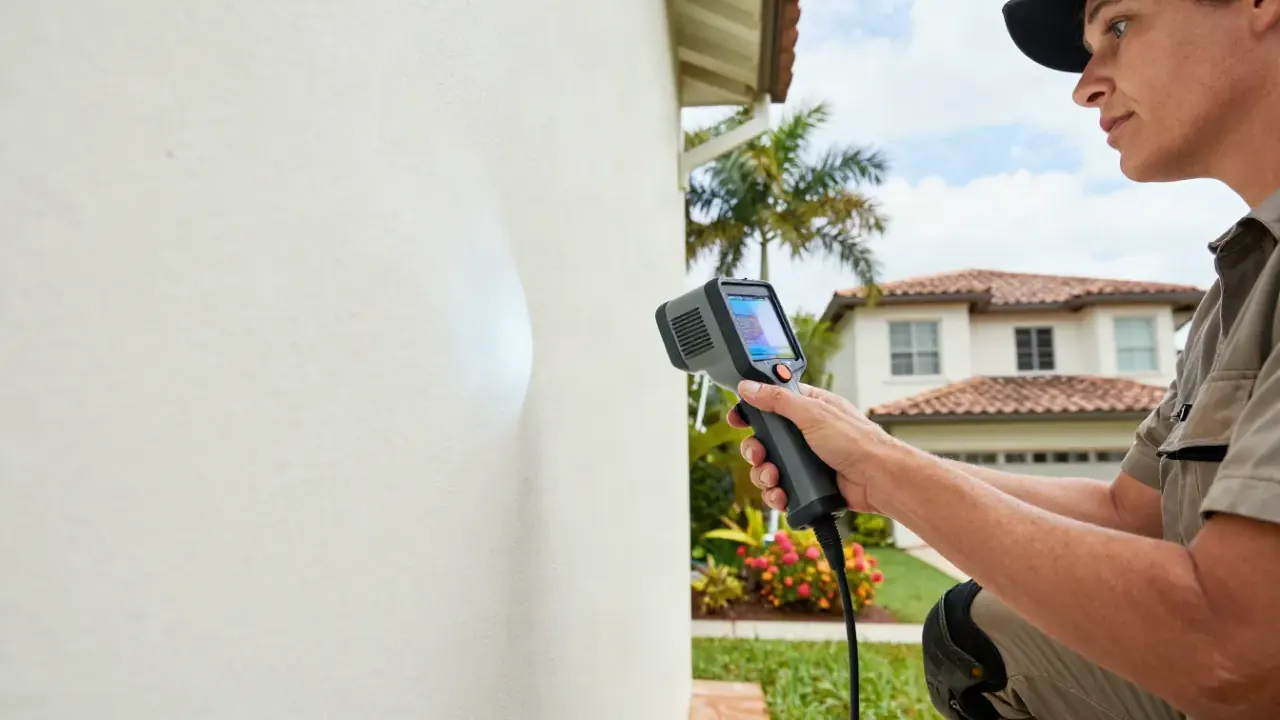
Commercial property leaks in Wellington FL are any unintended water escape from supply, drain, irrigation, or fire-protection lines serving a non-residential building - and protecting your building and tenants starts with knowing that a single hidden slab leak can cost $3,000 to $12,000 in repairs and lost rent before you ever see standing water. The answer is not reactive patching; it is scheduled leak detection, clear lease language, and fast professional location when a meter spins. This post covers what makes commercial leaks different here, how to prevent them, your landlord duties, inspection frequency, and when to call us.
Why Commercial Property Leaks in Wellington FL Are Different
Commercial buildings in Wellington sit on a mix of slab-on-grade, raised foundation, and equestrian-grade utility runs that behave nothing like a single-family home. A strip center on Forest Hill Boulevard might have six tenants sharing one 2-inch water service line; a barn or equestrian facility off South Shore Boulevard may run 400 feet of irrigation and wash-down lines underground. When one of those lines fails, the water can travel 30 to 50 feet laterally before it surfaces.
Wellington's water is moderately hard - 8 to 12 grains per gallon in most service areas - which accelerates scale buildup inside copper and galvanized pipe. Add the seasonal swing from dry winter to wet summer, and the soil around your foundation expands and contracts enough to stress buried lines. We see slab leaks and underground pipe failures year-round, but the calls spike every May and June when irrigation systems come back online.
Commercial leak protection Wellington property owners rely on starts with understanding that a leak in a tenant space is rarely just a tenant problem. Water migrates. It follows the path of least resistance - through shared walls, under tile, into the electrical room. By the time a tenant calls, the damage is often already in the structure.
How Do I Protect My Commercial Building From Leaks in Wellington FL?
Protecting your commercial building from leaks in Wellington FL comes down to four practices: monitor the water meter weekly, inspect known high-risk areas quarterly, maintain irrigation and fire lines annually, and respond to any unexplained bill increase within 48 hours. Everything else is detail.
Start with the meter. On a Friday evening after all tenants have left, shut off every fixture and irrigation zone, then read the meter. If the low-flow indicator is still spinning, you have a leak. A 1/16-inch pinhole leak at 60 PSI wastes roughly 6,000 gallons per month - enough to add $150 to $400 to a commercial water bill in Wellington depending on your rate tier.
Next, walk the building. Look for these specific signals:
- Warm spots on the floor - a hot-water slab leak under a break room or restroom.
- Musty odor in a tenant space - hidden moisture behind drywall, often from a wall leak.
- Unexplained increase in pest activity - ants and roaches follow moisture.
- Hairline cracks in tile or stucco - soil movement from a slow underground leak.
- Green patches in the parking lot or landscaping - a sign of a service line leak.
If you manage multiple properties, keep a simple log. Date, meter reading, any anomaly. When you call us for commercial leak detection Wellington, that log cuts diagnostic time in half.
For properties in the equestrian corridor, irrigation and sprinkler lines deserve their own annual check. A single broken head can waste 20,000 gallons a month. We handle that with sprinkler leak detection Wellington before the summer watering season starts.
What Are My Responsibilities for Leaks as a Landlord in Wellington?
As a landlord in Wellington, your responsibility for leaks is defined by your lease, Florida Statute 83.51, and the local code that governs commercial occupancy - and in practice, you are responsible for anything that affects the habitability, safety, or structural integrity of the building. That includes the water service line, the drain lines inside walls, the roof, and the fire sprinkler system.
Florida Statute 83.51 requires landlords to maintain plumbing in reasonably good working condition. For commercial tenants, the lease usually assigns responsibility for fixtures inside the demised premises - sinks, toilets, water heaters serving only that unit - while the landlord keeps the mains, risers, and common-area drains. Read your lease. If it is silent, the default is landlord responsibility for the building systems.
Tenant rights for leaks in commercial property Wellington are narrower than residential rights. A commercial tenant cannot withhold rent for a leak unless the leak makes the space unusable or violates the lease's quiet-enjoyment clause. But they can - and will - file a claim if their inventory, equipment, or customer area is damaged by water you failed to address.
Your practical duties:
- Respond to a reported leak within 24 hours with a professional assessment.
- Document everything - photos, meter readings, invoices, tenant communications.
- Repair the source, not just the symptom. Painting over a water stain is not a repair.
- Notify tenants in writing before any invasive work and after completion.
We work directly with property managers and landlords across the village. If you own a building near the equestrian venues, our team also covers Leak Detection in Equestrian Club and the surrounding commercial corridor. The rules are the same; the stakes are higher because of the equipment and animals on site.
How Often Should Commercial Properties Be Inspected for Leaks in Wellington?
Commercial properties in Wellington should be professionally inspected for leaks every 12 months at minimum, and every 6 months if the building is over 15 years old, has a history of leaks, or houses water-intensive tenants like restaurants, gyms, or car washes. Quarterly meter monitoring is something you can do yourself; professional acoustic and thermal inspection is not.
Here is a realistic schedule we recommend to our commercial clients:
- Weekly: Read the water meter and log it.
- Monthly: Visual walk of restrooms, break rooms, and mechanical rooms.
- Quarterly: Check irrigation zones and fire line pressure gauges.
- Annually: Full professional leak detection - acoustic listening, thermal imaging, and pressure testing.
- Every 5 years: Camera inspection of main drain lines to catch root intrusion and scale.
A full commercial inspection in Wellington typically runs $350 to $900 in 2026 depending on square footage and the number of systems. Compare that to the $4,000 to $15,000 a hidden slab leak can cost once it undermines flooring, walls, and tenant improvements. The math is not close.
If you are not sure where your building stands, start with a water meter leak investigation Wellington. We isolate the meter, test each zone, and tell you exactly where the water is going.
Common Mistakes Wellington Property Managers Make With Leaks
The most expensive mistake we see is waiting for visible water. By the time water reaches a finished surface in a commercial building, the leak has usually been running for weeks or months. Here are the others.
1. Trusting a handyman with a moisture meter. A pin-type meter tells you where moisture is, not where it comes from. We have torn out drywall in the wrong room more than once because a well-meaning repair tech chased a wet spot instead of the source.
2. Ignoring the irrigation system. Commercial irrigation runs at night when nobody is watching. A stuck valve can drain 50,000 gallons before the next bill. We trace those lines with underground leak detection Wellington without digging up your entire landscape.
3. Patching the pipe, not the cause. If a copper line failed from scale or vibration, the next section will fail too. We locate the failure mode, not just the wet spot.
4. Skipping documentation. When a tenant files a claim, your maintenance log is your defense. No log, no defense.
5. Using a residential leak detector on a commercial system. Commercial lines run at higher pressure and larger diameter. The equipment and the experience are different. This is why property managers search for commercial plumbing leak detection near me and end up with a company that only does houses.
When to Call a Professional for Commercial Leak Detection
Call a professional when your meter spins with everything off, when a tenant reports moisture you cannot trace, when your water bill jumps more than 20% without an occupancy change, or when you smell musty air in a space that has no obvious source. Those four signals cover 90% of the commercial leaks we find in Wellington.
We use acoustic listening equipment, thermal cameras, and pressure isolation to find the leak without tearing your building apart. For slab leaks, we pinpoint the break to within a few inches before anyone cuts concrete. For wall and ceiling leaks, we trace the path back to the source. If the drain line is the problem, we run a camera to see exactly what is blocking or breaking it.
Our process is straightforward: we find the leak, we tell you what it will take to fix it, and we do the work. Upfront pricing, no diagnostic surprises. If you manage a property in the Palm Beach Polo area or anywhere else in the village, we can usually be on site the same day you call.
Frequently Asked Questions
How do I protect my commercial building from leaks in Wellington FL?
Read your water meter weekly with all fixtures off, inspect restrooms and mechanical rooms monthly, service irrigation and fire lines annually, and schedule a professional leak inspection every 12 months. Respond to any unexplained bill increase within 48 hours. Those five habits prevent most of the expensive leaks we see.
What are my responsibilities for leaks as a landlord in Wellington?
Under Florida Statute 83.51 and most commercial leases, you are responsible for the water service line, common drains, roof, and fire sprinkler system. Tenants typically handle fixtures inside their unit. If the lease is silent, assume landlord responsibility for building systems. Document every report and repair.
How often should commercial properties be inspected for leaks in Wellington?
Every 12 months for buildings under 15 years old, every 6 months for older buildings or those with water-intensive tenants. Quarterly meter checks and monthly visual walks fill the gap. A professional inspection costs $350 to $900 and catches leaks that visual checks miss.
Who does commercial leak detection in Wellington?
Wellington Leak Detection handles commercial leak location for office buildings, retail centers, restaurants, and equestrian facilities across the village. We use acoustic, thermal, and pressure testing to find the source without unnecessary demolition. Call (561) 760-4218 to schedule.
Can a commercial tenant withhold rent for a leak in Wellington?
Only if the leak makes the space unusable or violates the lease's quiet-enjoyment clause. Commercial tenant rights are narrower than residential. Most disputes end in a damage claim, not withheld rent. Fix the leak fast and document everything to protect yourself.
Get Help With Leak Detection in Wellington
If your meter is spinning, your bill is climbing, or a tenant is reporting moisture you cannot find, we can locate the leak and stop the damage before it spreads. One call gets a technician to your commercial property with the equipment to find it fast.
Call Wellington Leak Detection at (561) 760-4218 to schedule commercial leak detection anywhere in Wellington and the surrounding communities.