For Homes
We test your meter, isolate the zones, and locate the leak before anyone digs. You watch the dial stop when we find the right line.
- Bill doubled this cycle
- Meter spins with taps off
- Warm spot on the floor
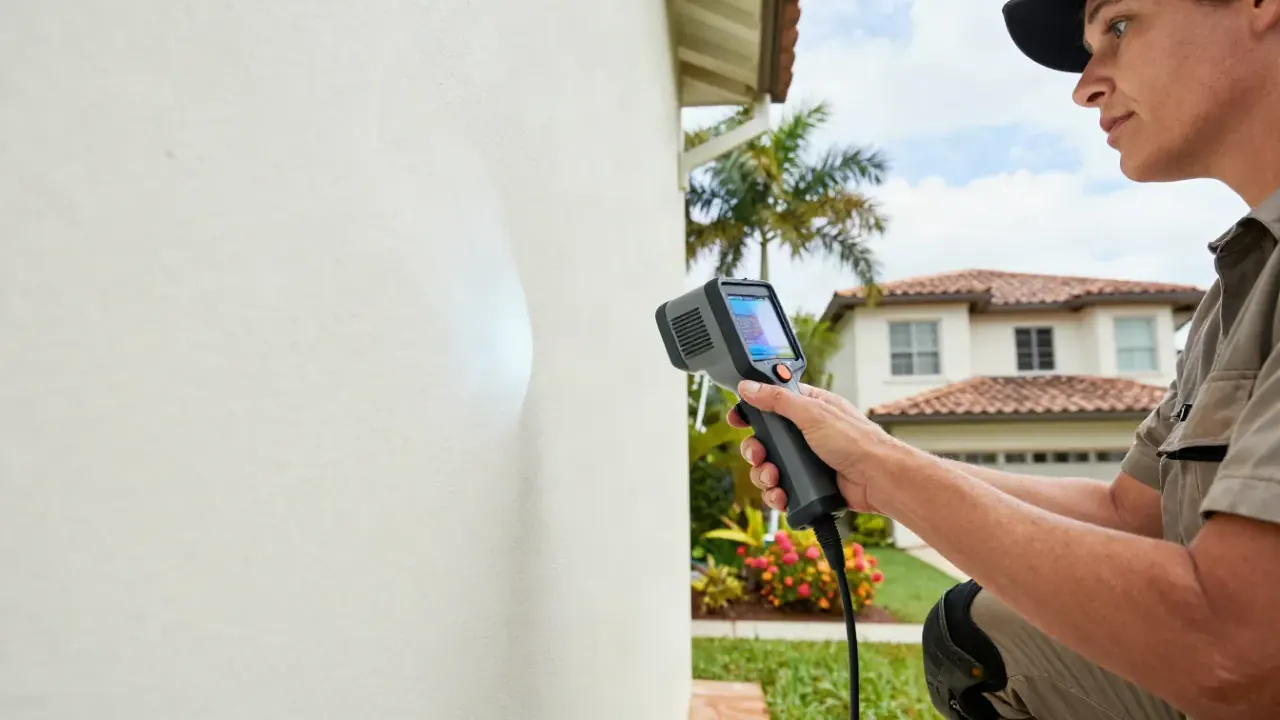
Water Meter and High Water Bill Investigation Wellington FL starts with a meter that never stops spinning. If your bill jumped and nothing changed, water is escaping somewhere between the meter and your fixtures. We trace it with acoustic listening devices and thermal imaging cameras, then show you exactly where it is. Same-day appointments across Palm Beach County.
 Meter flow checkZone isolationLeak marked
Every investigation includes meter verification, zone isolation, precision location, and a written findings report. Repair work is quoted separately once we know what failed and where it sits. Here is what you get on the visit.
We shut every fixture and appliance, then watch the meter dial and leak indicator for a full two minutes. You get a photographed reading and a confirmed flow rate before we search anything.
Irrigation valves, pool fill lines, and interior shutoffs get valved off one at a time until the meter stops. This step alone finds the problem in most Wellington homes and takes about twenty minutes.
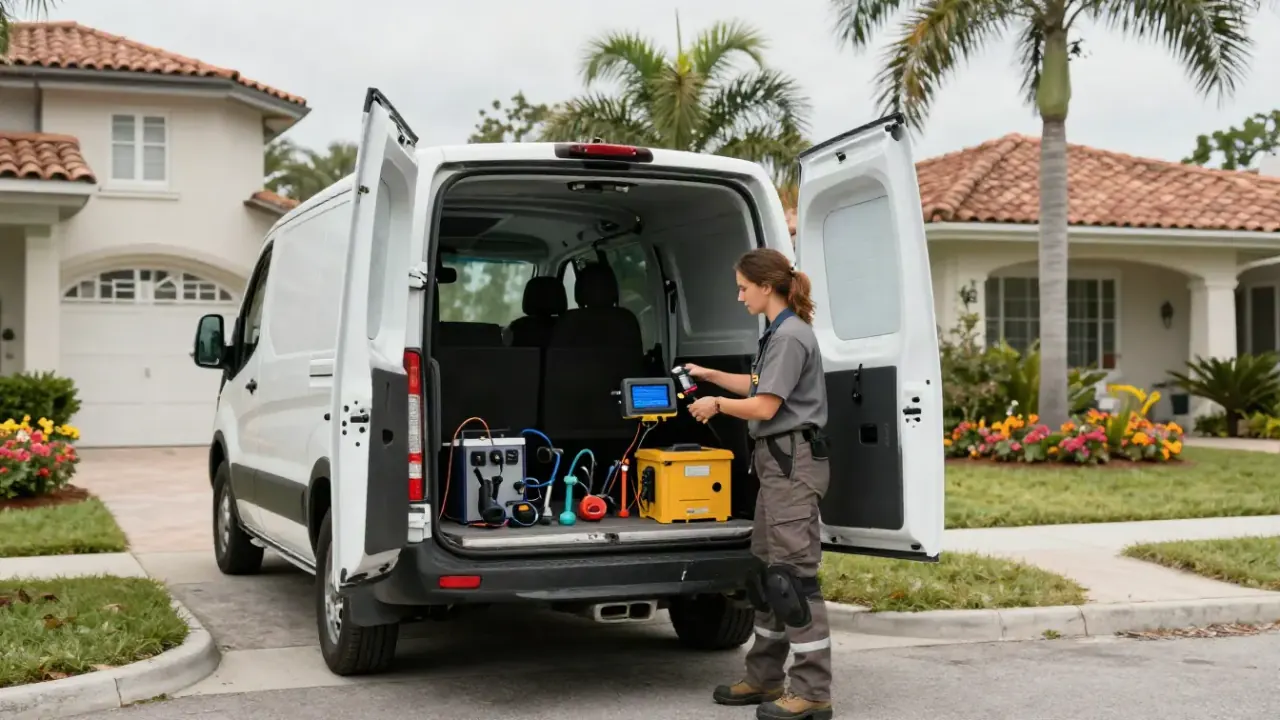
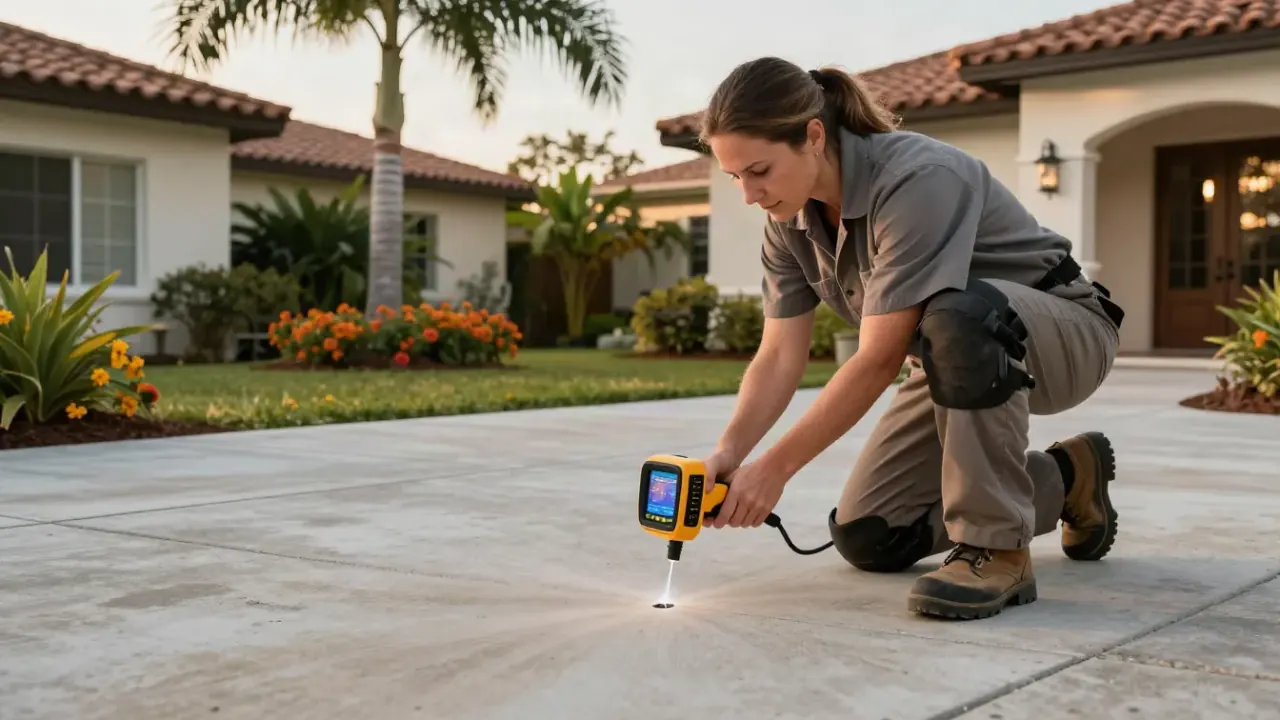
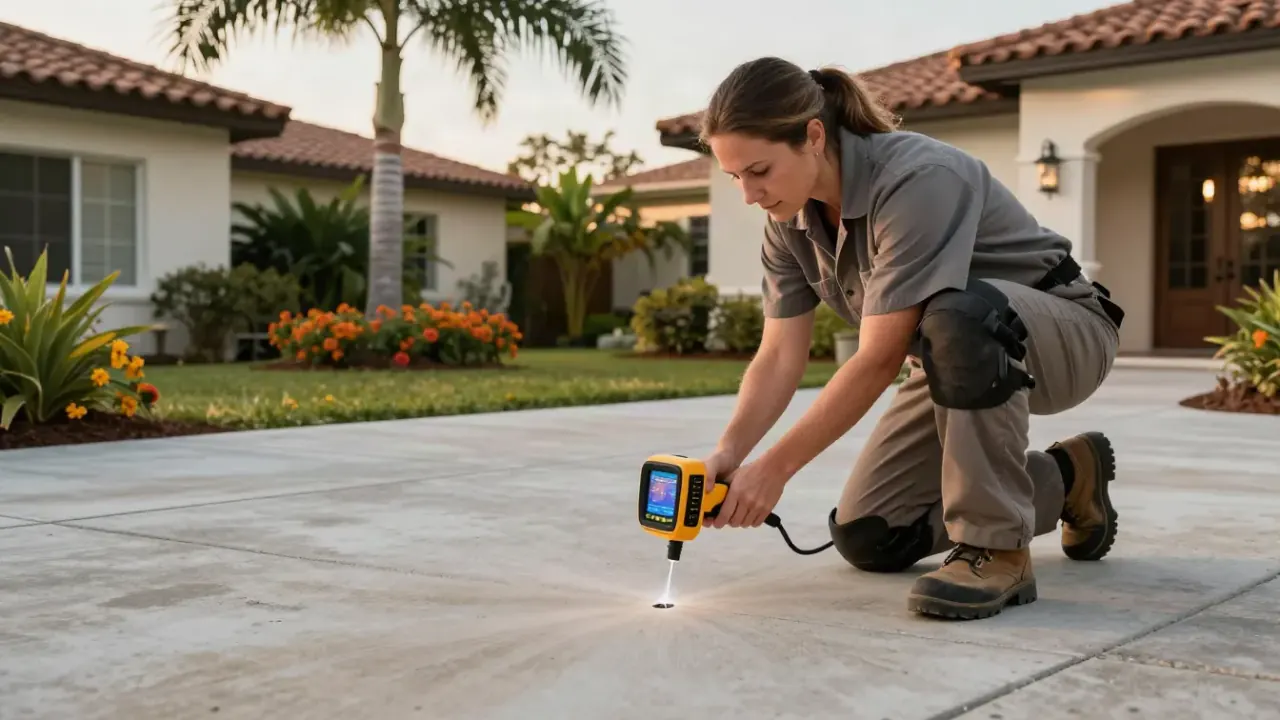
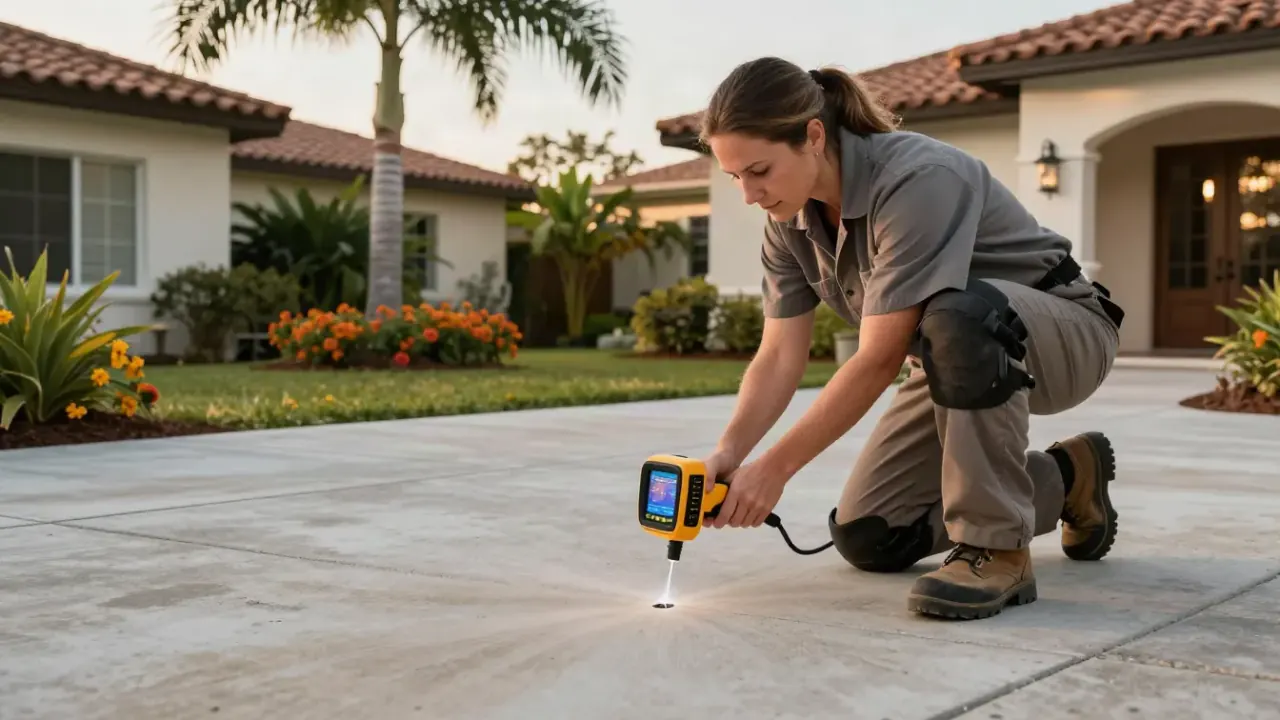
Inside the suspect zone we sweep with acoustic listening devices and thermal imaging cameras to narrow the leak to a single spot. Underground lines get tracer gas confirmation before we mark the ground.
You receive photos of the meter, the thermal image or acoustic reading, the confirmed leak location, and the recommended repair. Palm Beach County insurers accept this format for claim documentation.
Once we locate the leak we quote the fix flat, whether that is a pipe repair clamp on a service line or a copper section replacement under a slab. You approve the number before we cut anything.
The approach is the same for a home and a business. What changes is the access, the schedule and who needs the paperwork.
We test your meter, isolate the zones, and locate the leak before anyone digs. You watch the dial stop when we find the right line.
We run meter investigations on commercial accounts after hours so your operation keeps running. You get photos and a written report for your files.
A plain-language look at what Water Meter and High Water Bill Investigation involves and when it is needed.
See how it worksA water meter and high water bill investigation is a systematic hunt for the water you are paying for but never using. We isolate the meter, confirm whether the leak is on the supply side or the drain side, then narrow the search zone with pressure testing equipment and electromagnetic pipe locators. Most hidden leaks in Wellington homes turn up in irrigation lines, pool plumbing, or the underground water service line running from the meter to the house.
Wellington sits on sandy soil and high water tables, and the combination wrecks pipe faster than most homeowners expect. Irrigation zones run daily through the dry season, slab leaks go unnoticed under tile, and pool auto-fill valves mask losses for months. If you have been asking why is my water bill so high Wellington FL, the answer is usually one failing line, not a dozen small ones. We find it before you pay to repipe anything.
A high bill is a symptom. The meter tells us whether the leak is real before we search.
Five steps, one visit in most cases. Here is exactly what happens from the moment you call until you know where the water is going.
We ask for your last two bills, your meter number, and whether the leak indicator on the meter is spinning. That five-minute call tells us whether you are dealing with a supply-side leak or a fixture problem, and it lets us load the right equipment before we roll.
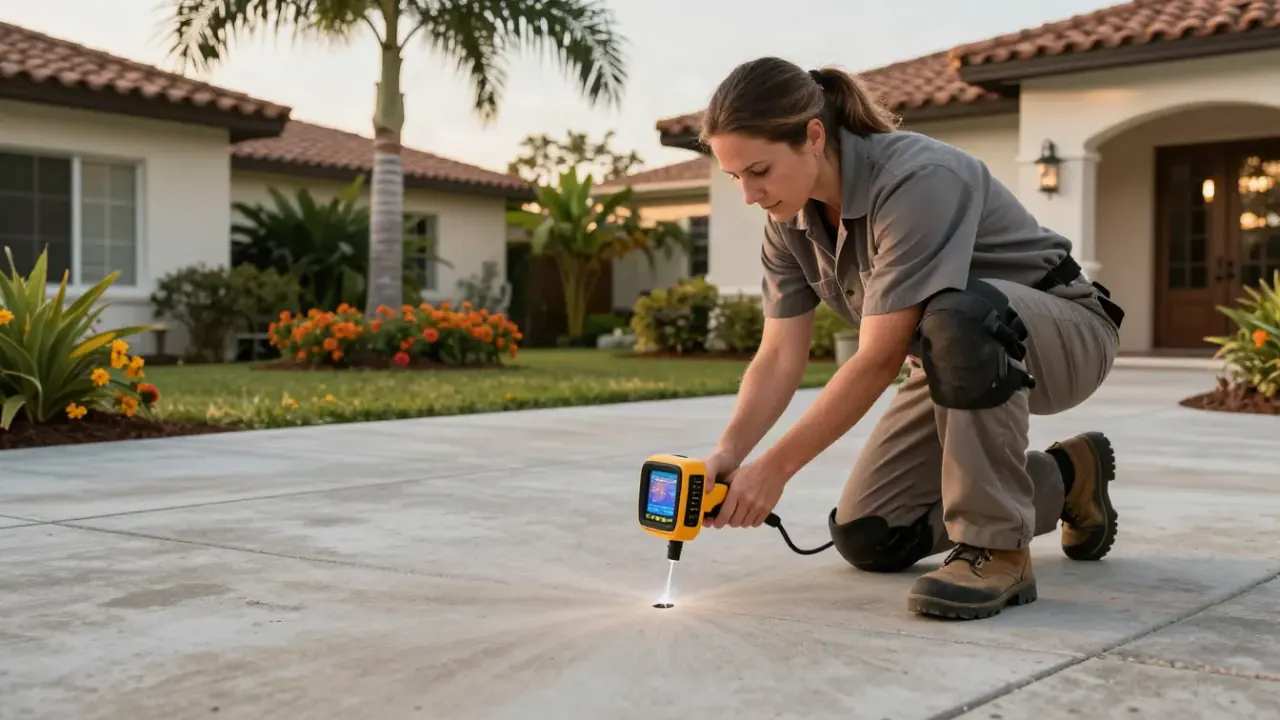
On arrival we shut every fixture and appliance, then watch the meter. A moving dial with everything off confirms an active leak. We log the reading, note the flow rate, and photograph the meter face for your report. This takes about ten minutes.
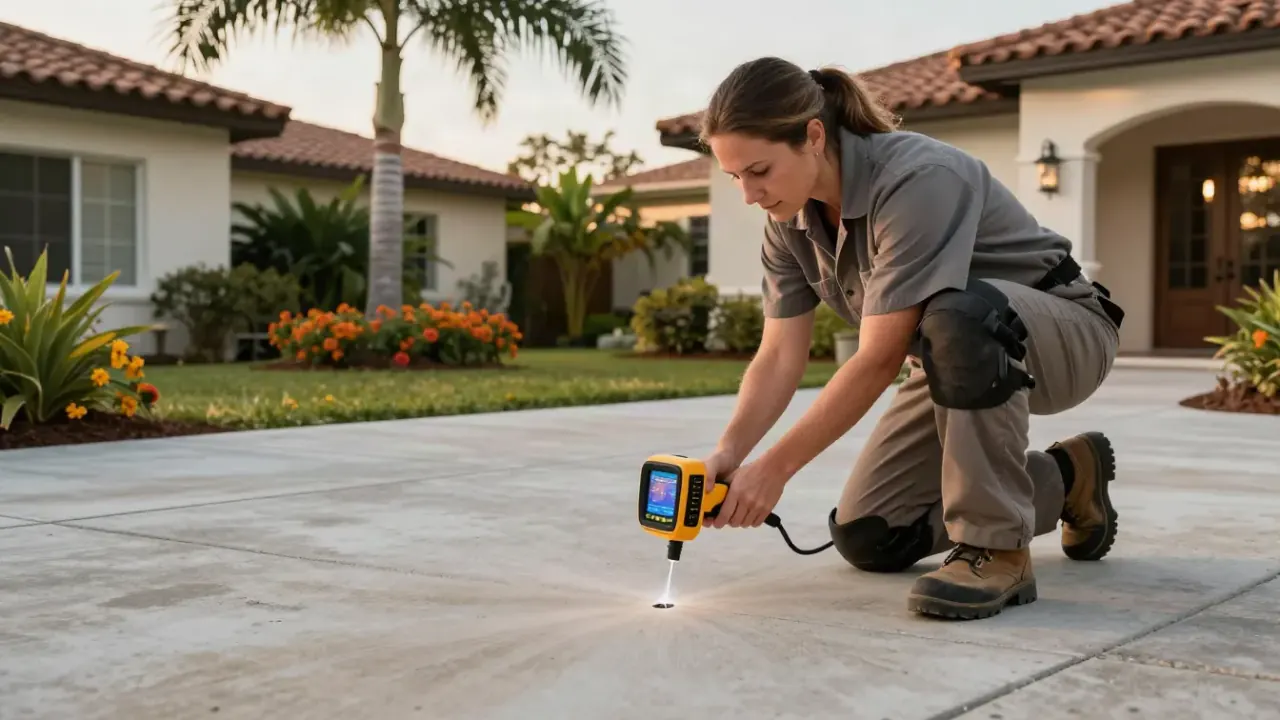
We valve off the irrigation system, pool fill line, and interior shutoffs one at a time. When the meter stops, we have our zone. This step is where most Wellington investigations end, because irrigation and pool lines fail far more often than interior plumbing.
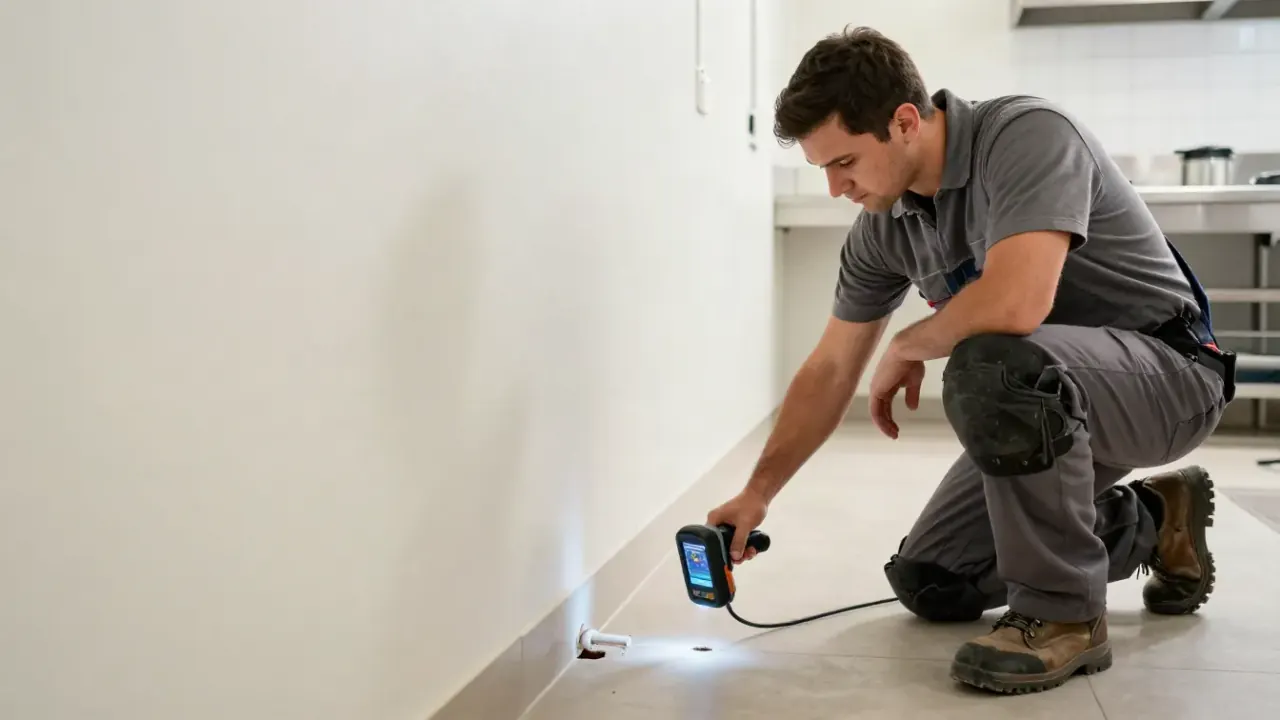
Inside the suspect zone we run acoustic listening devices along the pipe run, sweep with thermal imaging cameras, and confirm with pressure testing equipment. On underground lines we add a tracer gas leak detector. Expect 45 to 90 minutes for this phase.
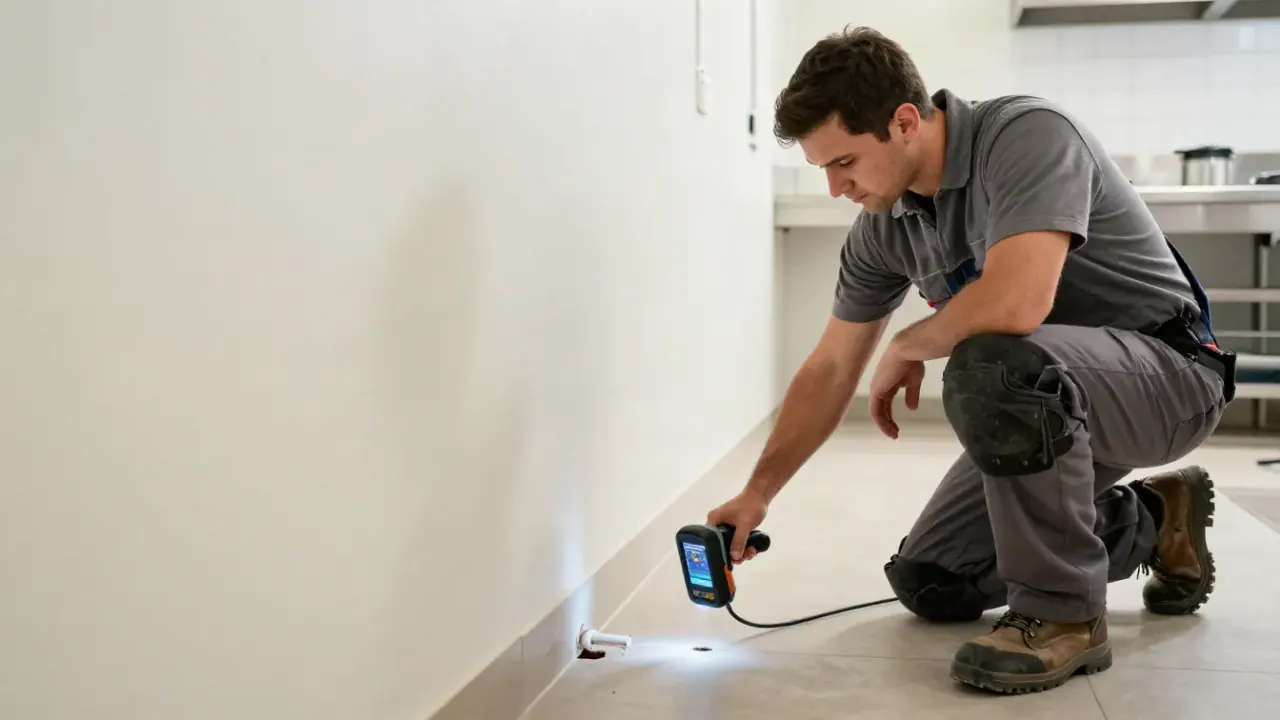
We mark the leak on the ground or floor, walk you through the photos, and give you a repair price before we touch anything. If you approve, most pipe repairs are done the same day with copper, PEX, or a pipe repair clamp where the line allows it.
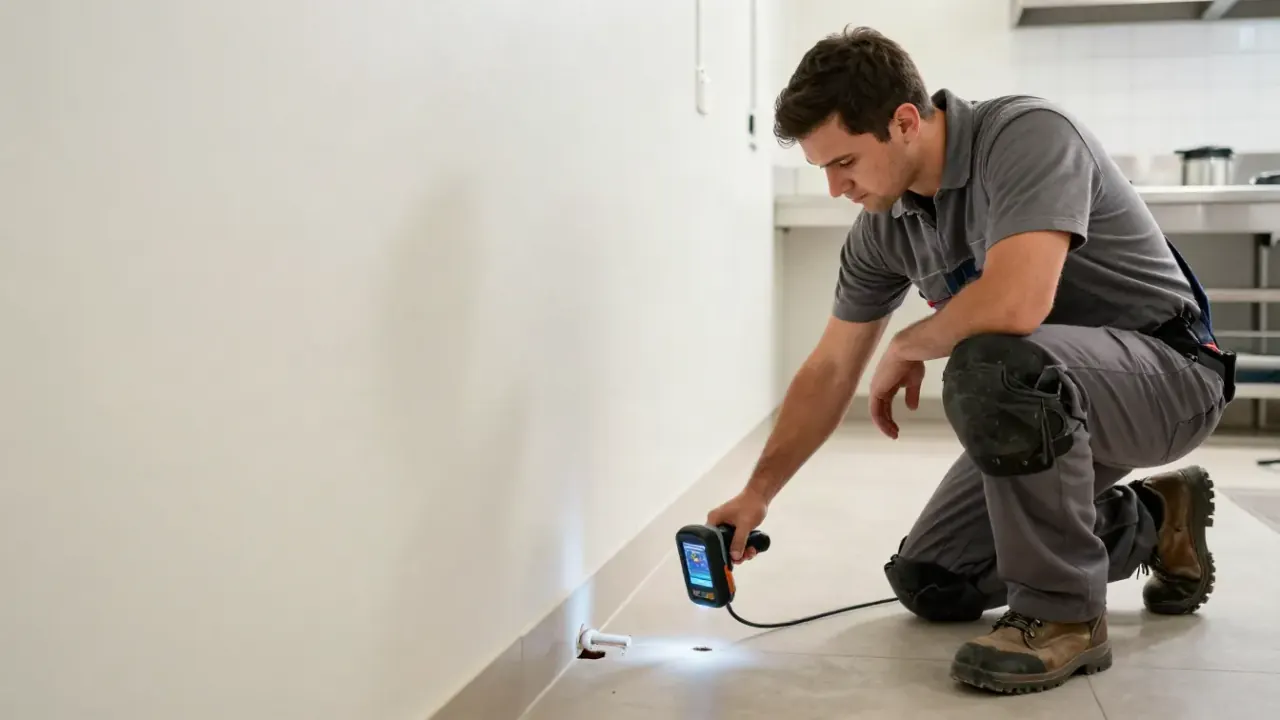
Move across a circle, or focus it and press Enter, for an illustrative thermal view of the photograph.
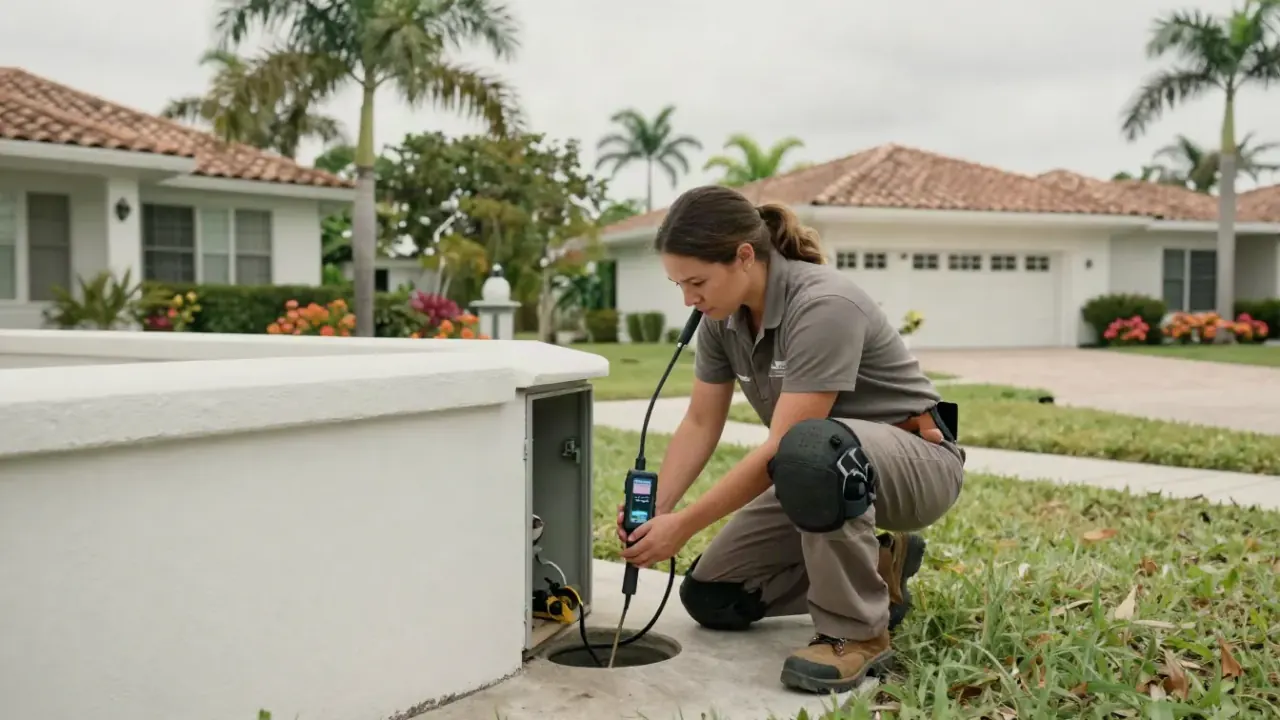
Amplify the hiss of pressurized water escaping a pipe so we can trace the leak along the line without opening the ground.
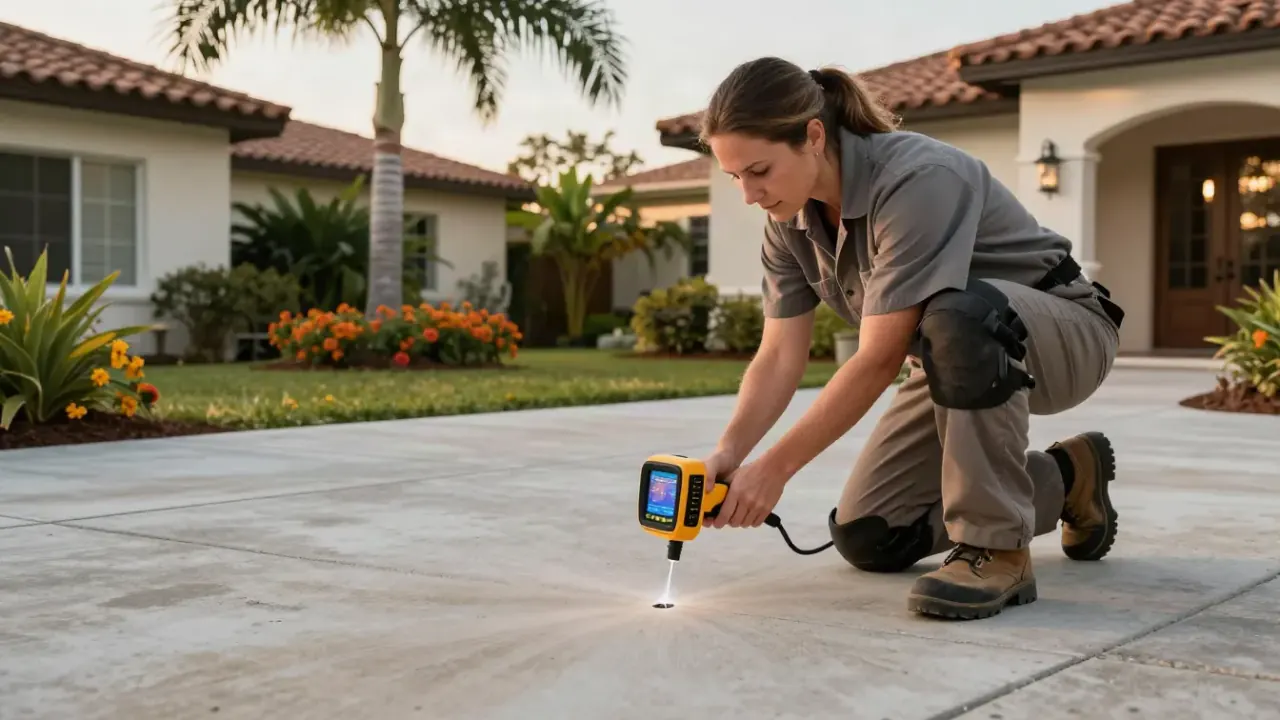
Read temperature differences across slabs, walls, and ceilings to confirm a hot-water leak before any demolition starts.
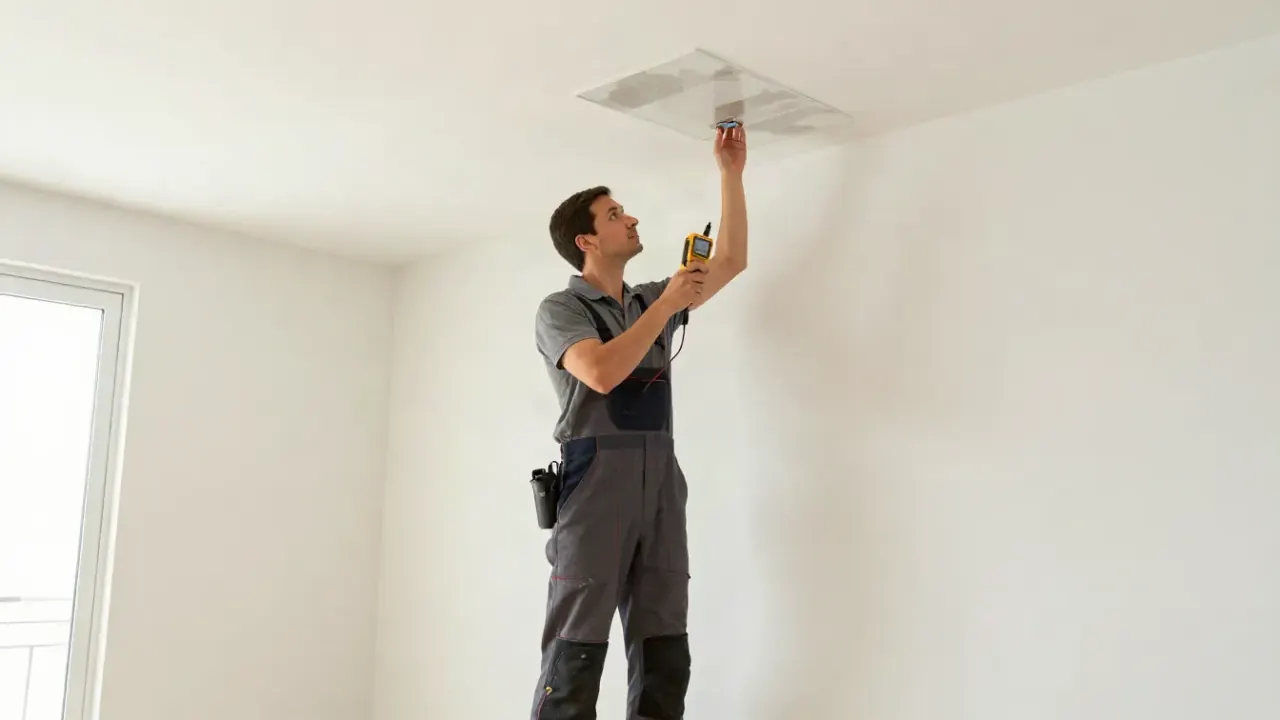
Isolate a suspect line and confirm it holds pressure, which separates a real leak from a fixture or valve problem.
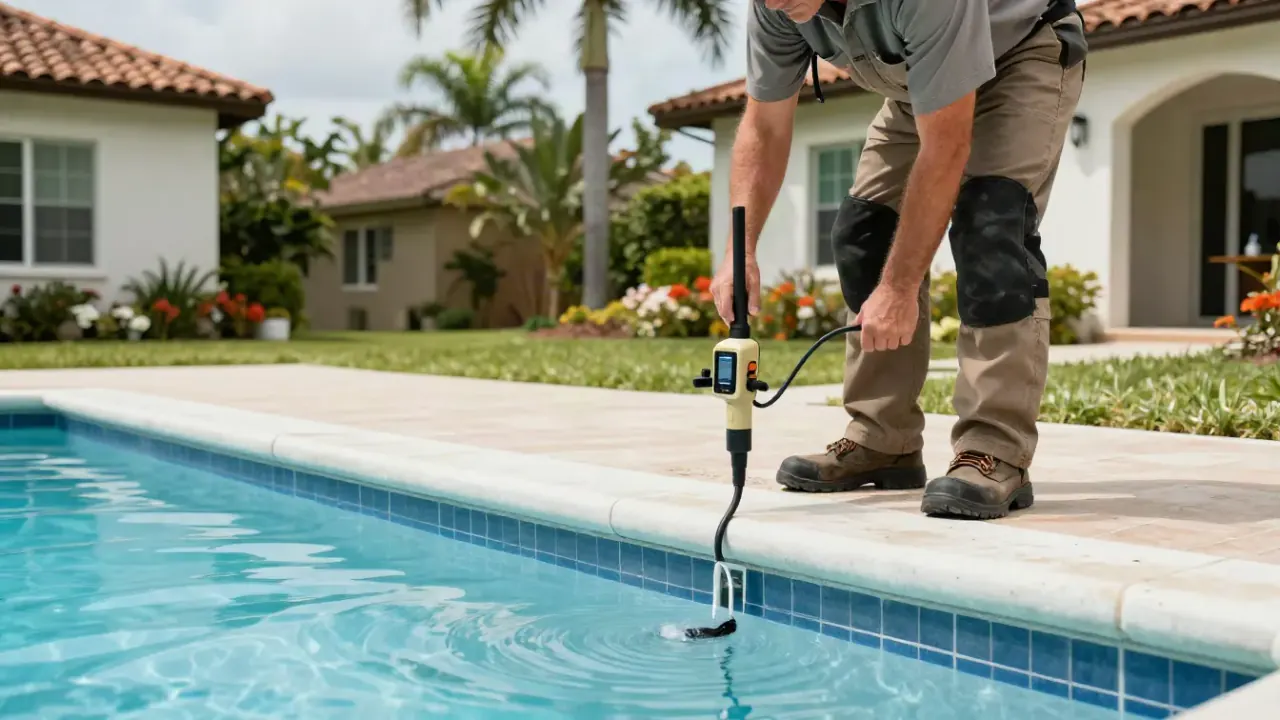
Push a safe gas mix through an underground line and read where it surfaces, pinpointing the break within a foot.
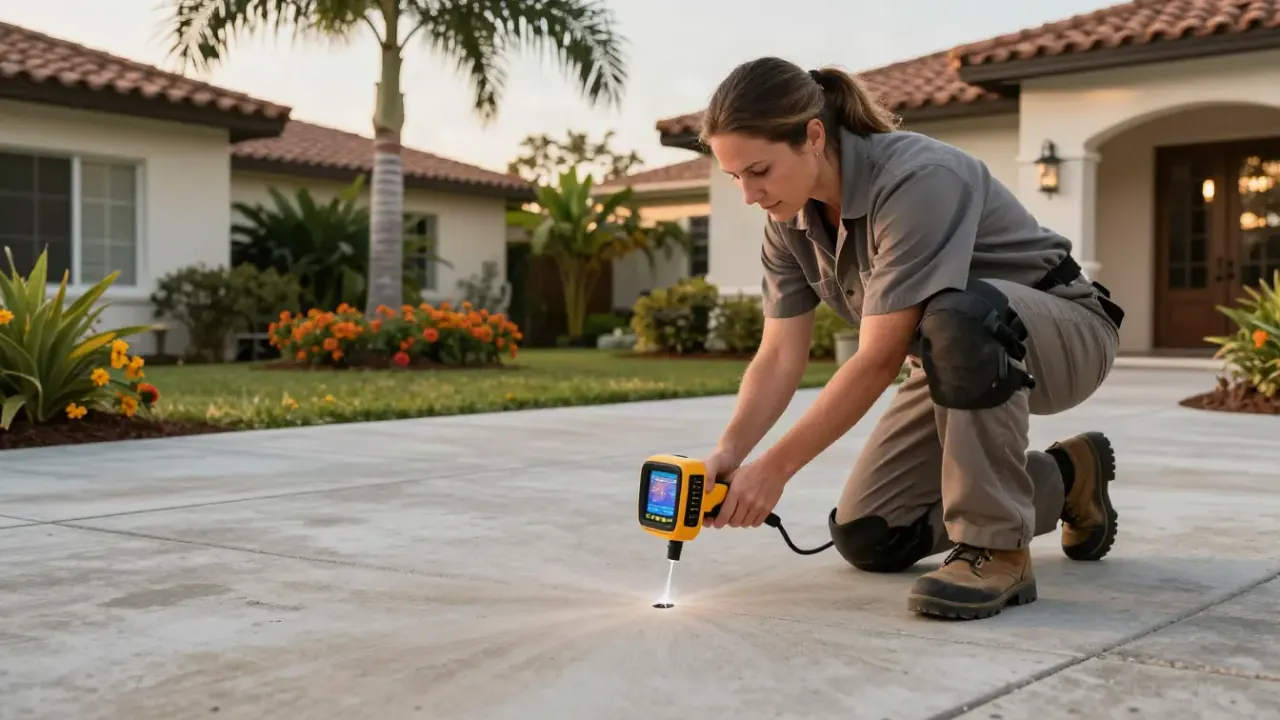
Map the exact path of a buried service or irrigation line so the excavation stays small and targeted.
Thermal views are illustrative, generated from the photographs.
Measure water content in drywall, baseboards, and subfloor to confirm how far a wall or ceiling leak has spread.
Run the interior of drain and sewer lines to rule out a drain-side problem when the meter test comes back clean.
We shut every fixture and appliance, then watch the meter dial and leak indicator for two full minutes. Any movement confirms an active leak and gives us a flow rate to work from. This is the same test the county uses when it flags a high-consumption account.
Irrigation valves, pool fill lines, and interior shutoffs get closed one at a time. When the meter stops, we have our zone. In Wellington, this step alone identifies the problem in most homes because irrigation and pool lines fail far more often than interior plumbing.
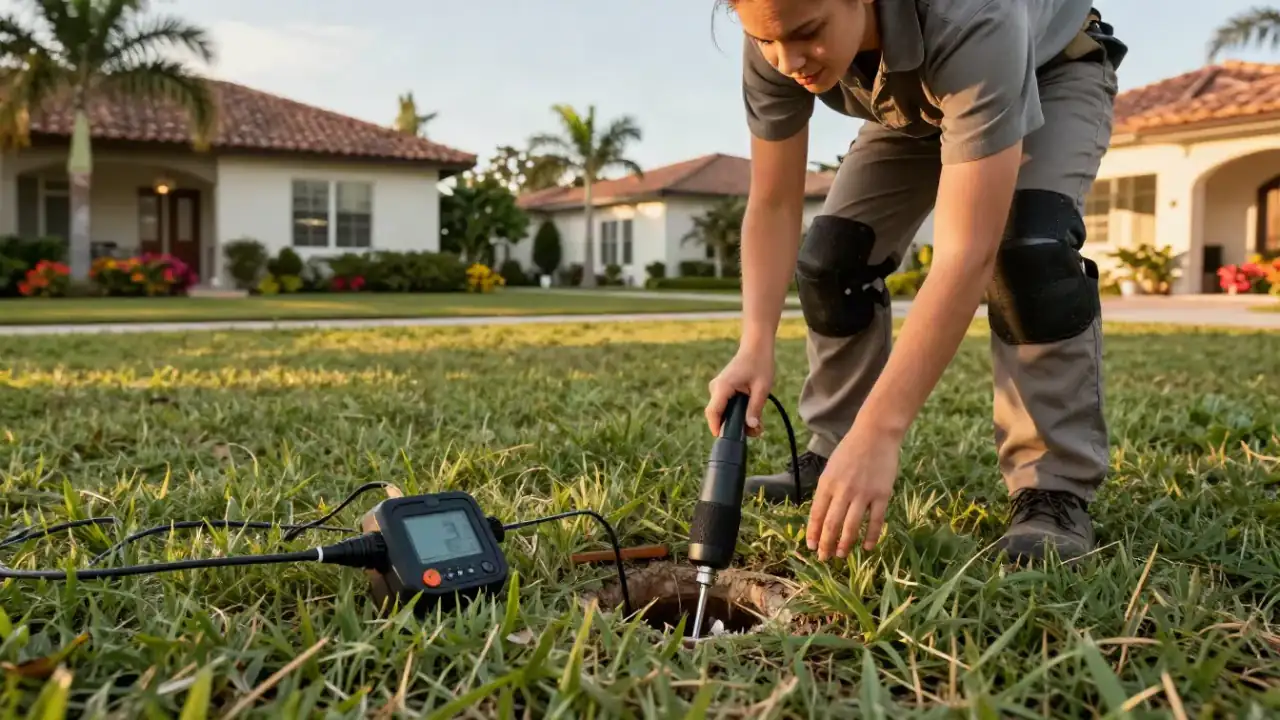
Two sensors placed on the pipe at known distances pick up the leak sound and calculate its position between them. On underground service lines this narrows the target to within a foot before anyone lifts a shovel.
A FLIR camera scans the slab or wall surface for temperature anomalies. A hot-water line leak shows as a warm streak; a cold line shows as a cool one. We photograph the image for your report.
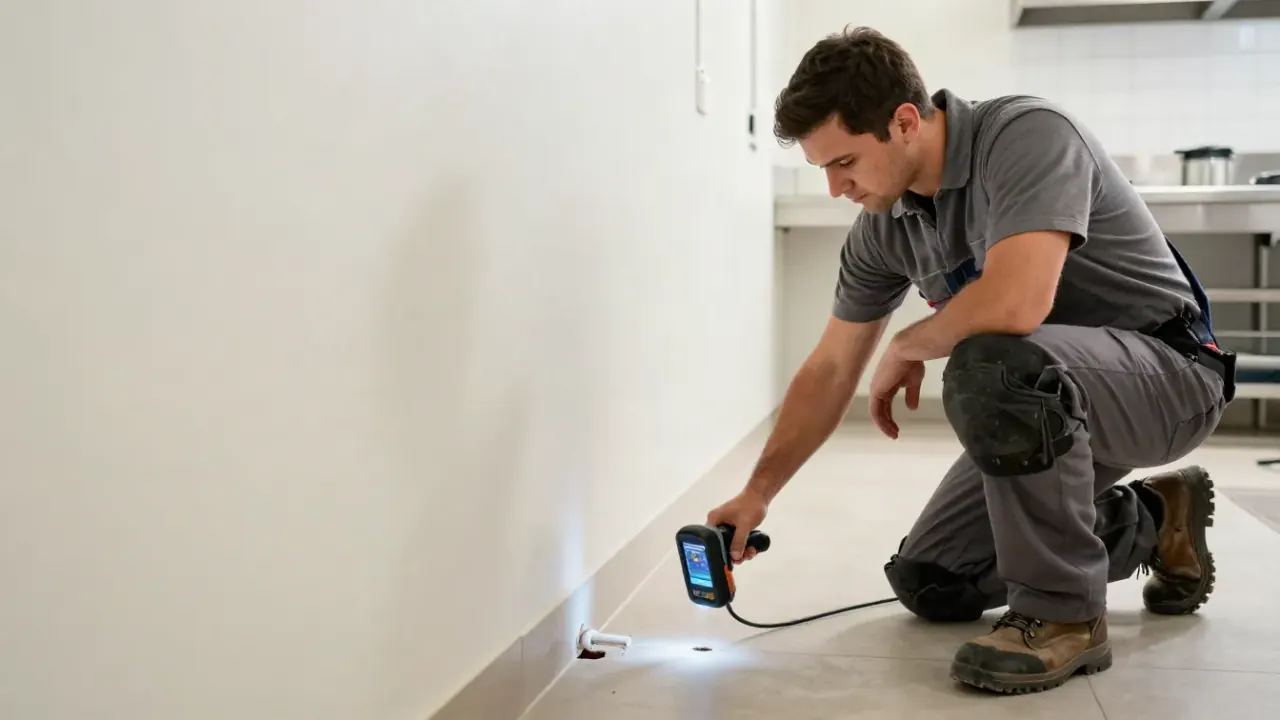
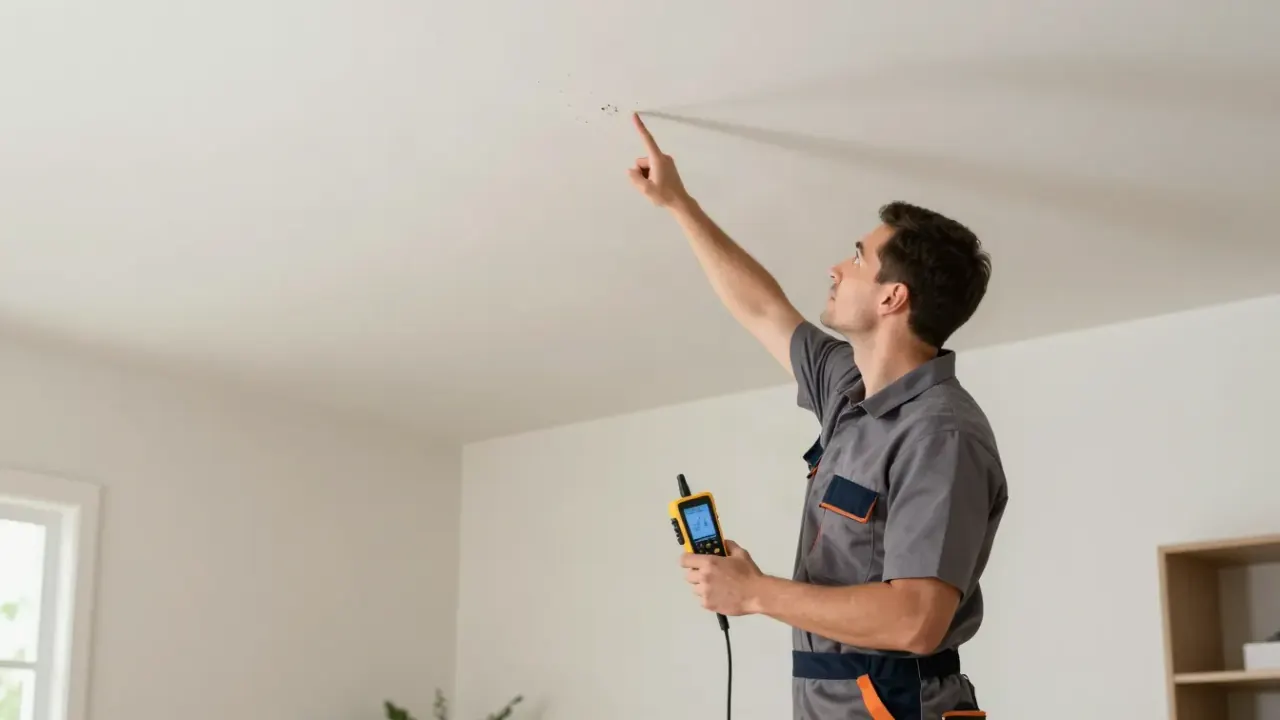
Your bill doubled and the meter leak indicator is spinning with every fixture off.
We run the full meter investigation, isolate the zone, and locate the leak with acoustic and thermal equipment. Most cases are confirmed within two hours of arrival.
Outcome: You know exactly where the water is going and have a flat repair price before anyone digs or opens a wall.
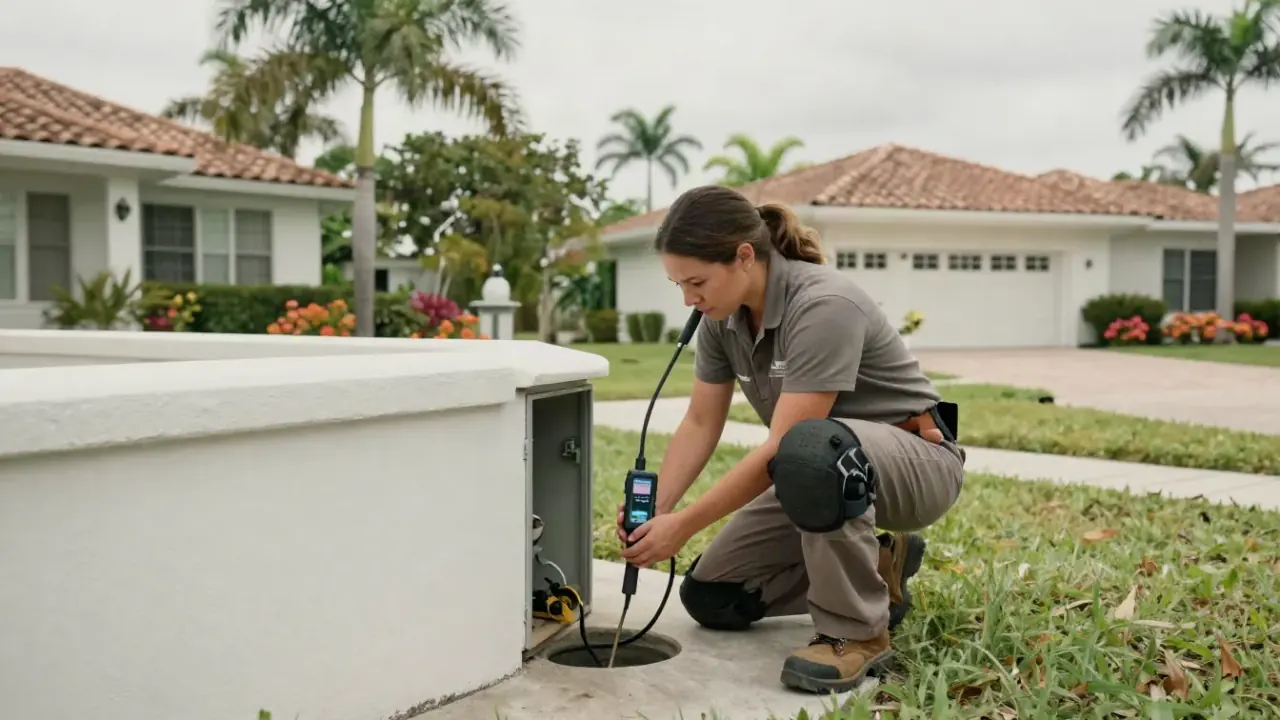
You are buying a Wellington home and the inspection flagged high water usage.
We test the meter, isolate irrigation and pool lines, and check the underground service line before closing. The written report goes to your realtor and lender.
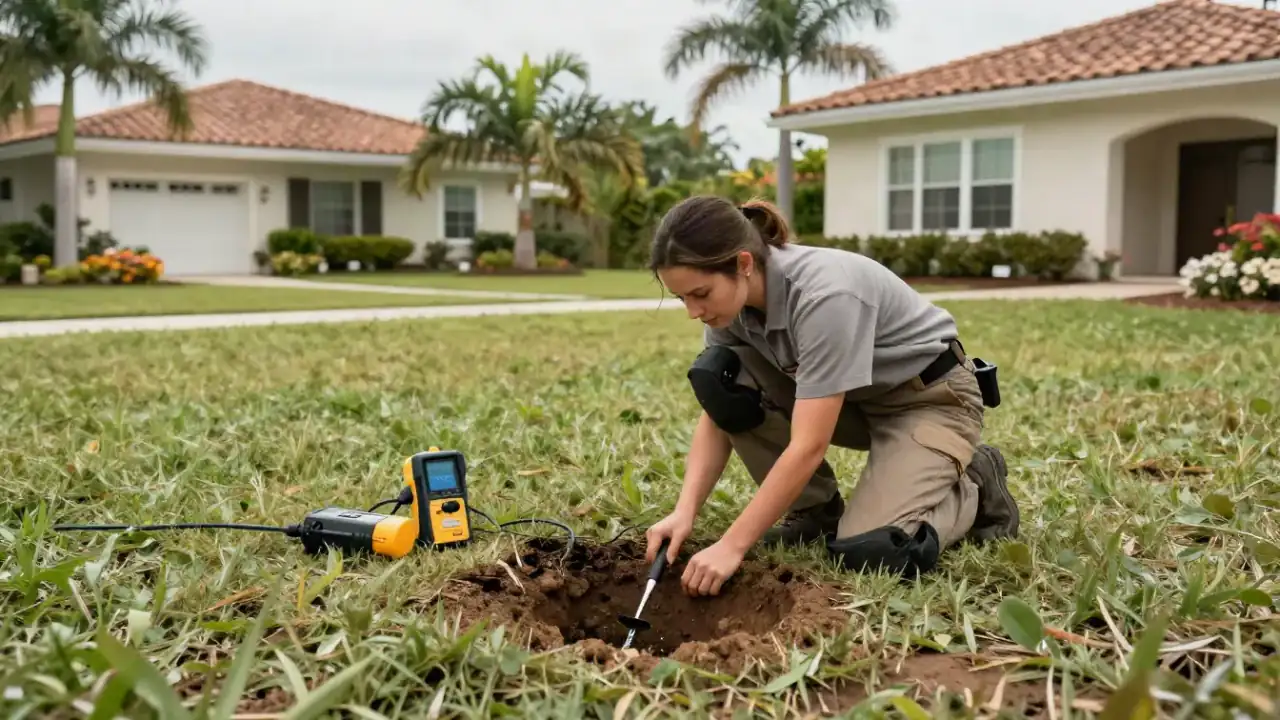
A tenant in your commercial plaza reports a spike and you cannot find the source.
We run the investigation after hours so business is not interrupted, isolate the failing unit, and document the leak location with photos for your insurance file.
Outcome: The leak is repaired within a day and your water consumption returns to baseline on the next reading.
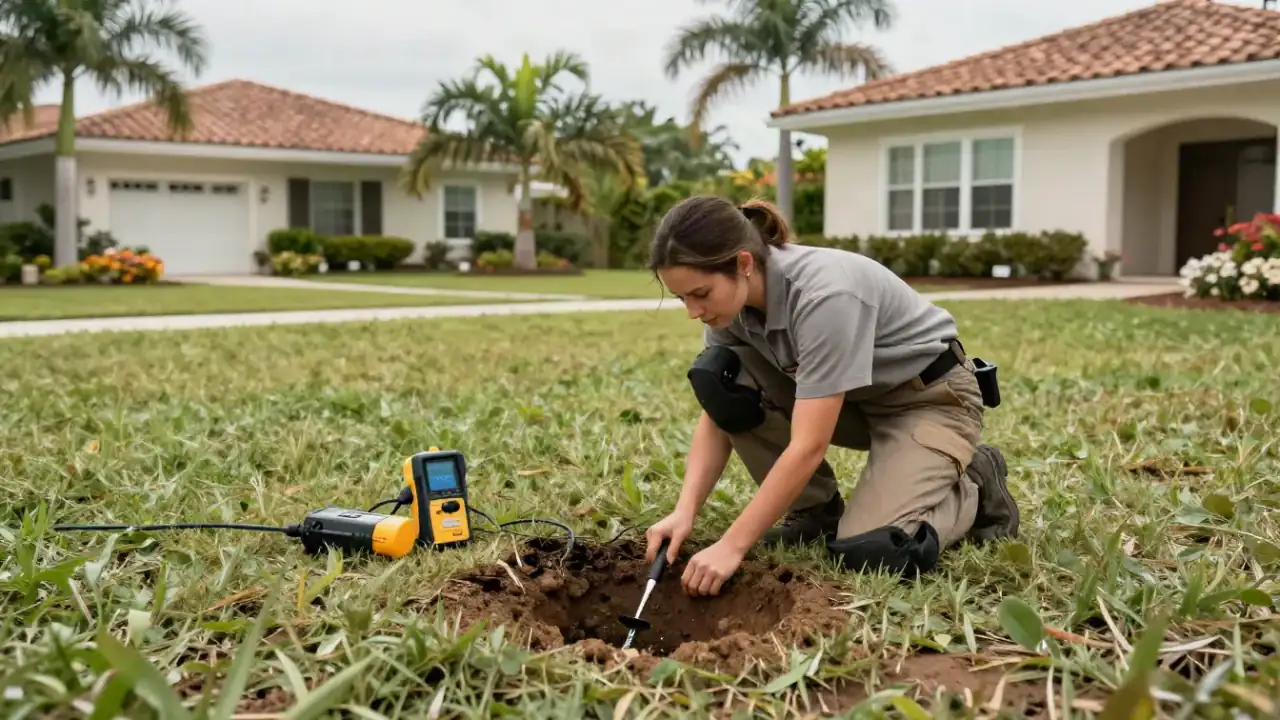
Your irrigation runs daily and the lawn has a soggy patch that never dries.
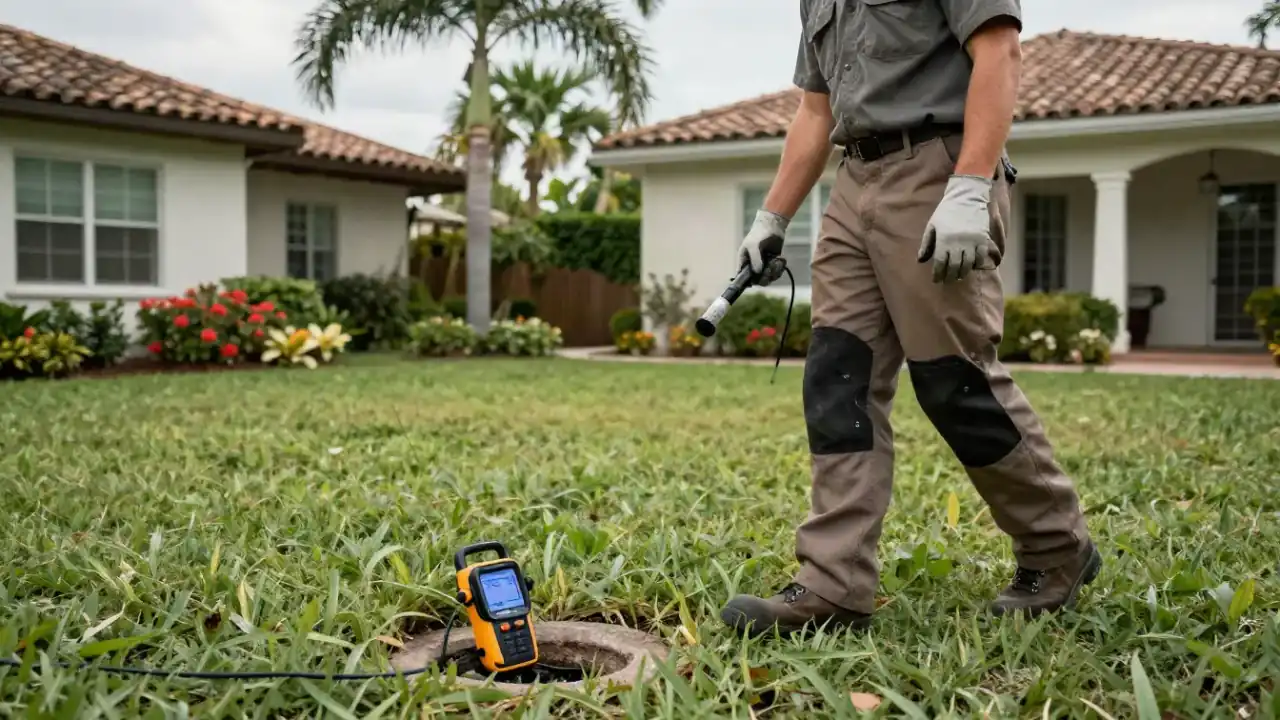
We isolate each zone at the valve box, watch the meter, and locate the failed lateral with acoustic listening. The break gets marked with paint for a single targeted dig.
Outcome: One zone gets repaired instead of the whole system replaced, and your dry-season bill drops back to normal.
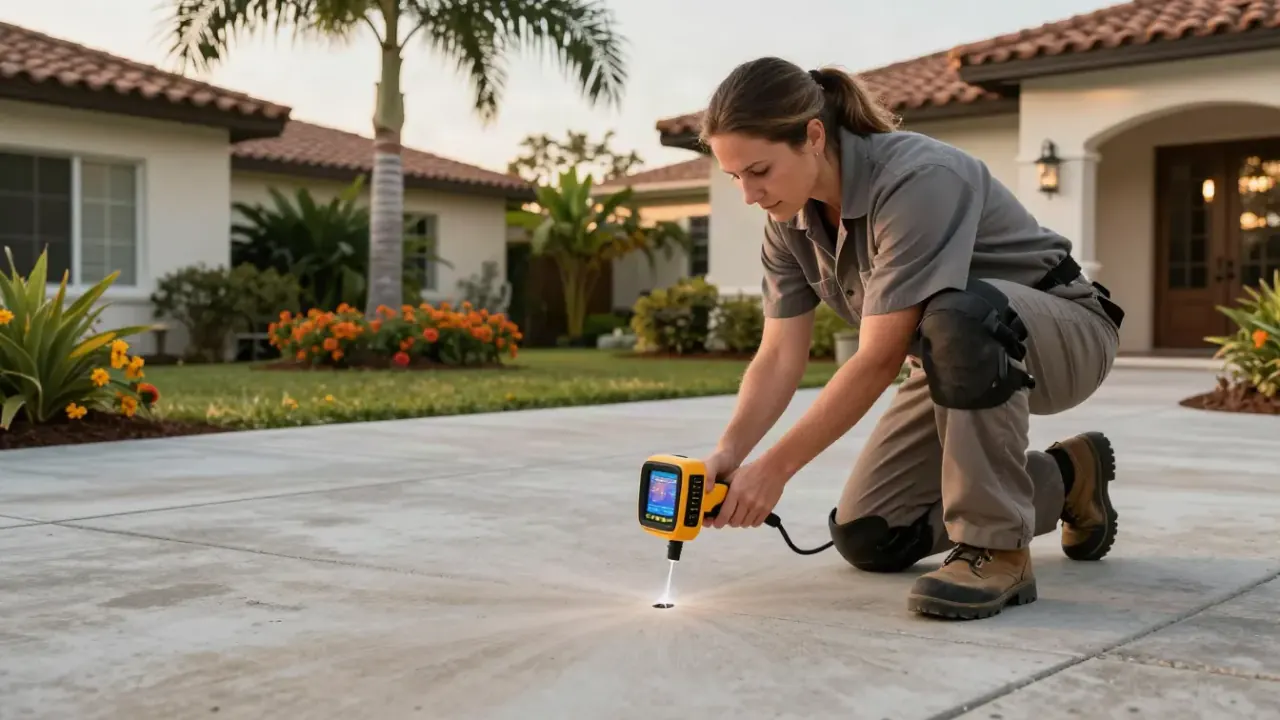
You had a plumber out twice and the bill is still climbing.
We start fresh at the meter, verify flow, and work outward with pressure testing equipment and electromagnetic pipe locators until the leak is confirmed and marked.
Outcome: You get a documented location instead of another guess, and the repair finally addresses the right line.
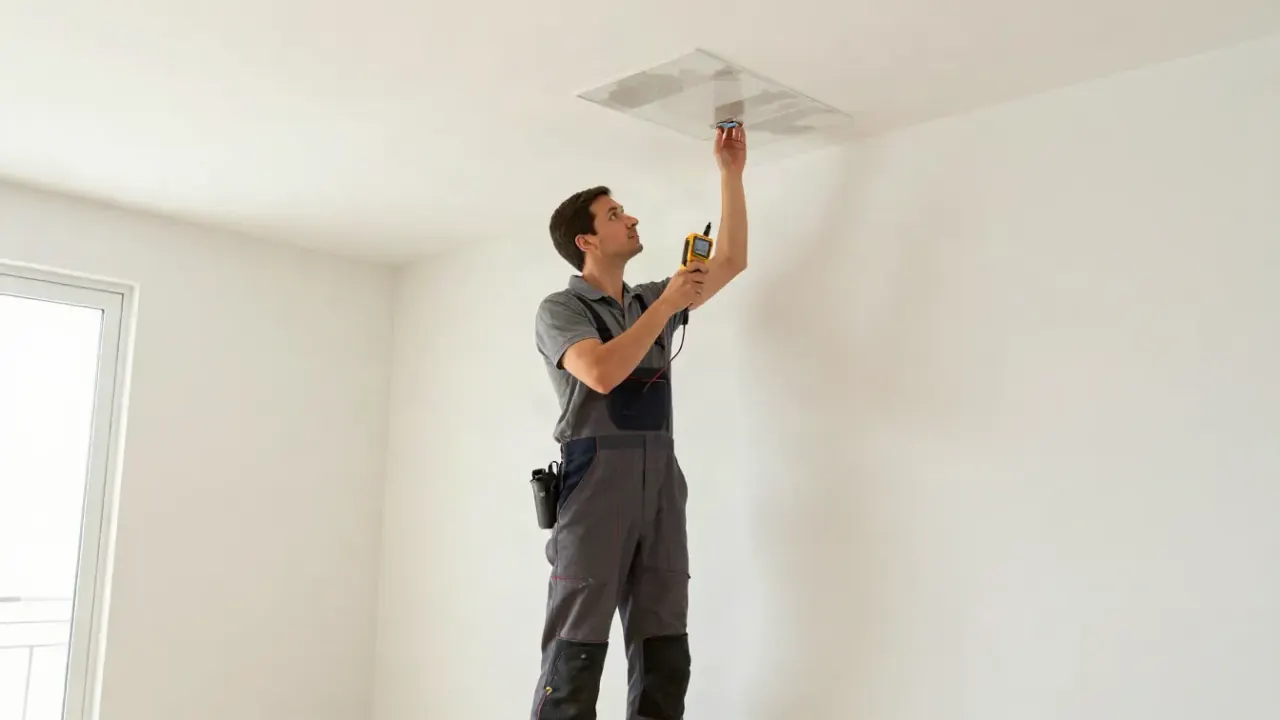
Wellington's sandy soil and high water table put constant stress on buried pipe. Irrigation systems run daily from November through May, and that dry-season demand is when most lateral lines fail.
Homes in the older western communities often still have galvanized or early copper service lines that are now pinhole-prone, while newer builds in Olympia and Black Diamond tend to fail at fittings and irrigation valves instead. Florida plumbing code requires backflow prevention on irrigation and pool fill lines, and those assemblies are a common leak point we check on every investigation.
We also see a steady run of slab leaks in 1990s concrete-block homes where the under-slab copper has finally given out. Palm Beach County water is moderately hard, which accelerates scale buildup inside copper and shortens the life of the line. That is why we pressure test before we mark anything.
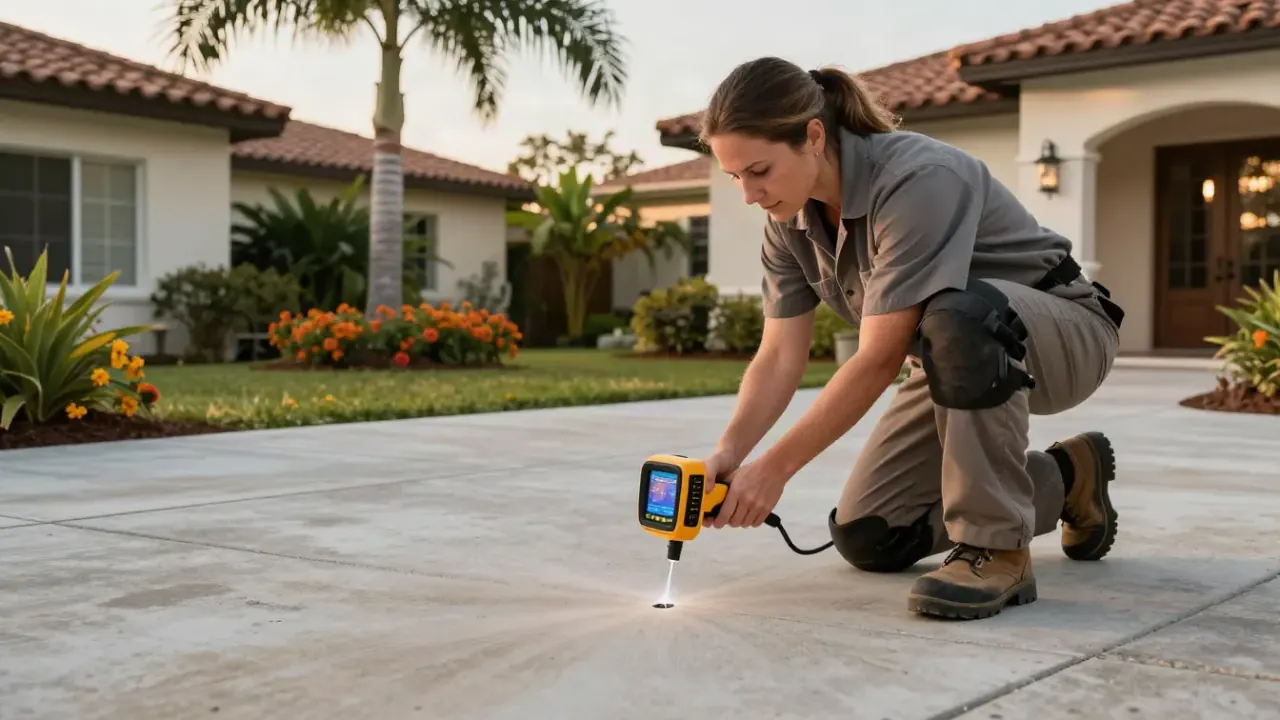
Before: The lawn had one soggy patch that never dried, but three irrigation zones all seemed to run normally. The meter dial spun with every fixture off.
After: We isolated the zones at the valve box and found zone four never held pressure. Acoustic listening marked the break 12 feet from the valve.
Run each zone manually once a month and watch for soft spots. Replace valve diaphragms every three to four years before they stick open.
Before: The hallway tile felt warm and the meter never stopped. Two plumbers had checked fixtures and found nothing. The bill had doubled for three straight months with no visible water anywhere in the house.
After: Thermal imaging showed a warm streak running under the hallway. Acoustic correlation confirmed the break in the hot-water line 18 inches past the second expansion joint.
Watch for recurring warm spots on tile and keep an eye on the meter indicator monthly. A five-minute check catches a new leak early.
Before: The meter spun constantly. The homeowner was quoted for a full repipe before anyone tested the line between the meter and the house.
After: We pressure tested the service line and confirmed it was losing water. Tracer gas located the break four feet from the meter box.
Have the service line pressure tested every few years on older homes. Keep the meter box clear so the indicator stays easy to read.
A high bill is rarely a mystery once the meter gets tested properly. These are the failures we locate most often in Wellington homes and businesses.
You stop paying for water that never reaches a tap.
We locate it in one visit, so you stop paying for water that never reaches a tap. Most customers see the bill normalize on the very next cycle.
We do not tear up your yard hoping to get lucky. Acoustic listening devices and tracer gas leak detectors narrow the target to within a foot before anyone lifts a shovel. That means one small excavation instead of three exploratory trenches across your landscaping.
Slab leaks start as a warm spot on the floor or a faint hiss near a wall. Left alone, they undermine flooring and drywall. Our thermal imaging cameras read the temperature difference across the slab and confirm the leak before the damage spreads into your living space.
We hand you a written report with photos, meter readings, and the confirmed leak location. You get the paperwork the same day, not a week later.
What a written scope covers and what shapes it. Prices are set by the business after the first look.
Included
Depends on
Clear records you can keep and share.
Photographed readings before and after isolation
Marked leak location with thermal or acoustic image
Confirmed cause and recommended repair
Flat price for the fix you approve
The meter tells you which side of the system is losing water before we search anything.
Water under pressure before the fixture
Waste water leaving after the fixture
Loss at a valve, toilet, or appliance
A list like this tells people straight away whether you cover their street. Not listed? Call and ask: it only takes a minute.
Based in Wellington and covering the places around it. Pick one for local details.
We shut off every fixture, watch the meter dial, and confirm an active leak in about ten minutes. Then we valve off zones one at a time until the dial stops, which isolates the failing line. From there we use acoustic listening devices and thermal imaging to pinpoint the exact spot. Most investigations finish in 90 minutes to two hours.
The three most common causes we find in Wellington are irrigation line leaks, a failed pool auto-fill valve, and an underground water service line leak between the meter and the house. A single pinhole leak in copper pipe can waste 10,000 gallons a month. Check your meter with everything off. If the dial moves, call us.
Yes, and it is the fastest free test you can run. Shut off every faucet, appliance, and irrigation zone, then watch the leak indicator on your meter for two minutes. Any movement means water is escaping. That confirms a leak exists but not where it is. That is the part we handle with acoustic and thermal equipment.
Repair is quoted separately after we locate the leak. You approve the price before we start.
Other services from the same team.
If your meter dial is moving with everything shut off, you are paying for water right now. Call (561) 760-4218 and we will schedule a same-day investigation across Palm Beach County. You get the leak location, photos, and a repair price before we start.
Call us at (561) 760-4218 or email [email protected]. Most inspections are scheduled same-day or next-day. We serve Wellington and all of Palm Beach County.