Water Stains on Ceilings and Walls: What They Mean
A brown ring on your ceiling or a bubbling wall isn't cosmetic. Here's what water stains on ceilings and walls really mean in Wellington, FL, and how to trace the source.
A water stain on your ceiling or wall almost always means water is actively getting into the structure from above or behind the surface - it is not a cosmetic problem, and it will not dry out on its own. In Wellington, FL, the most common causes are a leaking roof flashing, a failed AC condensate line, a pinhole in copper supply pipe, or a slow drain leak in a second-floor bathroom. The rest of this post breaks down what each type of stain is telling you, how to trace the source without tearing your house apart, and when it is time to bring in a leak detection team.
What Water Stains on Ceilings and Walls Actually Mean
Water stains on ceilings and walls what they mean Wellington FL comes down to one thing: moisture is traveling through your home's framing, drywall, or plaster, and it is leaving minerals, rust, and mold behind as it moves. The stain is the visible end of a path that started somewhere else - often 3 to 10 feet away from where you see the discoloration.
Water follows gravity and the path of least resistance. It runs along joists, drips down the inside of a wall cavity, and pools on top of a ceiling before it finally soaks through the paint. That is why a stain in your hallway ceiling can trace back to a shower pan in the guest bathroom, or a stain on a bedroom wall can come from a roof penetration two rooms over.
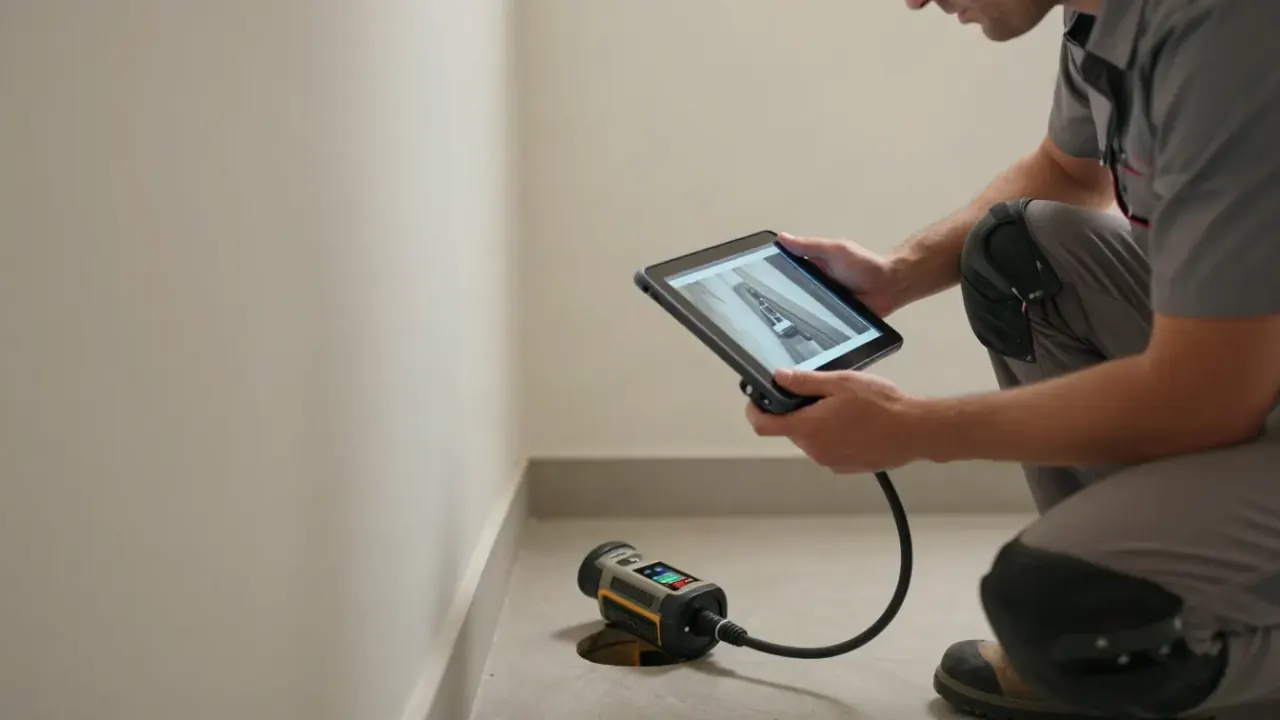
If you are seeing this for the first time, the fastest way to get a straight answer is professional ceiling leak detection Wellington. We use thermal imaging, moisture meters, and acoustic listening to follow the water back to its source without opening up every wall in the house.
Why Wellington Homes Get Water Stains So Often
Wellington's climate is hard on plumbing and roofing. We get 50-plus inches of rain in a typical year, most of it between June and October, and the humidity never really drops below 60% for long. That combination means small leaks that would stay dormant in a drier climate turn into visible stains fast here.
Three local patterns show up again and again:
- Afternoon thunderstorms in summer. A roof flashing that held fine all spring will start weeping during a 2-inch downpour. Stains appear on the ceiling of the room below, usually within a day.
- AC condensate lines. Your air handler runs 8 to 10 months a year. A clogged condensate drain backs up into the pan and overflows into the ceiling of the room below - one of the most common calls we get.
- Slab and underground pipe movement. Wellington's sandy soil and seasonal water table shifts put stress on buried copper and PVC. A pinhole leak under the slab can wick up through the wall and show as a stain at the baseboard.
We see these patterns across the older sections of Olympia Leak Detection and in the newer builds around Binks Forest Leak Detection, where irrigation lines and pool plumbing add another layer of possible sources.
Do Water Stains Always Mean a Leak in Wellington?
No - but about 9 out of 10 water stains we inspect in Wellington trace back to an active or recently active leak. The exceptions are worth knowing so you do not panic over a stain that is actually old.
A stain can be historical if:
- The previous owner fixed a roof leak but never repainted the ceiling.
- A one-time overflow (bathtub, toilet, AC pan) dried out and left a ring.
- Condensation from a poorly insulated duct dripped once during a cold snap.
Here is the test: press a paper towel or your finger against the center of the stain. If it is damp, cool to the touch, or the paint feels soft, the leak is active. If it is bone dry and the ring has not grown in two weeks, it is likely old. When in doubt, a water meter leak investigation Wellington will tell you in about 30 minutes whether water is moving through your system when nothing is running.
How to Find the Source of a Ceiling Water Stain in Wellington
Finding the source of a ceiling water stain in Wellington means working backward from the stain to the nearest water source above it. You do not need to cut open the ceiling to start - you need a flashlight, a moisture meter if you have one, and 20 minutes.
- Map what is above the stain. Bathroom? AC air handler? Attic with a roof penetration? Second-floor laundry? That short list is where 80% of leaks originate.
- Check the attic first. Look for dark streaks on the underside of roof sheathing, wet insulation, or daylight around pipe boots and vents. Roof leaks show up here long before they show on the ceiling below.
- Run each fixture one at a time. Fill the tub, then drain it. Flush the toilet. Run the shower for 5 minutes. Watch the stain for any change in size or dampness.
- Check the AC pan and condensate line. If the pan is full or the drain line is clogged, you have your answer.
- Look at the water meter. With every fixture off, watch the leak indicator dial for 10 minutes. Any movement means an active leak somewhere on the supply side.
If those steps do not pin it down, the leak is likely inside a wall cavity or under the slab. That is when we bring in thermal cameras and acoustic sensors. For supply-side leaks under the foundation, we use slab leak detection Wellington to pinpoint the break within a few inches before any concrete is touched.
What Different Stain Colors and Shapes Tell You
The color and shape of a water stain is a clue about what is leaking and how long it has been going on. Here is how we read them in the field:
- Brown or tan ring with a darker center. Classic slow leak from above - roof, AC pan, or supply line. The dark center is where water is currently pooling.
- Yellowish or pale brown. Older stain, likely dried out. Watch it for two weeks to confirm it is not growing.
- Gray or black speckling. Mold or mildew growth. This means the area has been wet for at least 48 to 72 hours. Treat it as urgent.
- White, chalky residue. Efflorescence - minerals left behind as water evaporates through the drywall. Common with slab and foundation leaks.
- Bubbling or peeling paint. Water is trapped behind the paint film. The leak is active right now.
- Vertical streak on a wall. Water is running down inside the cavity from a point above - often a second-floor bathroom or a roof leak at the top plate.
If the stain is on an exterior wall and you also have an irrigation system, a broken sprinkler zone can saturate the soil and push water against the foundation. That is a job for sprinkler leak detection Wellington, and it is one of the most commonly missed causes we find.
What to Watch Out For (Common Mistakes)
The biggest mistake homeowners make is painting over the stain. It hides the evidence, traps moisture in the drywall, and gives mold a clean surface to grow on. Within a month the stain is back, usually bigger.
Other mistakes we see regularly:
- Assuming it is the roof. In Wellington, AC condensate and supply-line leaks cause more ceiling stains than roofs do. Do not call a roofer until you have ruled out the air handler.
- Ignoring a small stain. A stain the size of a quarter can be fed by a leak that has been running for weeks inside the wall. Drywall is cheap; framing rot and mold remediation are not.
- Cutting a big hole to "find it." A 12-inch exploratory hole often misses the source. Thermal imaging finds it in minutes with a 2-inch access point.
- Turning off the water and calling it fixed. Shutting the main stops new water from entering, but the existing moisture still needs to dry out and the leak still needs repair.
One more: do not assume a stain that stopped growing is safe. Slow leaks can run for months, then reappear during the next heavy rain or the next time you run the shower.
When to Call a Professional
Call a leak detection professional when the stain is growing, when you cannot find the source with the steps above, or when the stain is anywhere near an electrical fixture, outlet, or light. Water and wiring do not mix, and that situation is not a DIY job.
You should also call us if:
- The stain is larger than a dinner plate.
- You see mold, black speckling, or smell a musty odor.
- Your water bill jumped more than 20% with no change in usage.
- The stain is on a slab-on-grade wall or near the baseboard.
- You have already cut open drywall and still cannot find the source.
Our team at Wellington Leak Detection finds the leak, confirms it with a moisture reading, and gives you a clear repair plan before we leave. Most residential leak traces take 60 to 90 minutes, and we can usually tell you the source the same day you call.
Frequently Asked Questions
What do water stains on my ceiling mean in Wellington FL?
A ceiling water stain in Wellington almost always means an active leak above the ceiling - most often a roof flashing, AC condensate line, or second-floor plumbing leak. The stain is where water has soaked through the drywall. If it is damp or growing, treat it as active and get it traced within a few days.
Are water stains always from a leak in Wellington?
About 9 out of 10 stains we inspect trace to an active or recent leak. The rest are historical - a fixed leak that was never repainted, or a one-time overflow. Press the stain: if it is damp or the paint is soft, it is active. If it has not grown in two weeks and is bone dry, it is likely old.
How do I find the leak causing water stains in Wellington?
Start by mapping what is above the stain - bathroom, attic, or AC air handler. Check the attic for wet sheathing, run each fixture one at a time, and watch your water meter with everything off. If those steps do not find it, the leak is inside a wall or under the slab and needs thermal or acoustic detection.
Who fixes water stains and leaks in Wellington?
You need two trades: a leak detection specialist to find and repair the source, and a drywall or painting contractor to repair the stain after the area has dried. Wellington Leak Detection handles the leak trace and repair. We confirm the fix with a moisture reading before we leave, so you know the wall is dry.
How much does leak detection cost in Wellington in 2026?
Most residential leak traces in Wellington run $250 to $450 in 2026, depending on whether the leak is in a wall, under a slab, or on the supply line. That fee covers the trace and a written report. Repair is quoted separately once we know what we are fixing. We give you the price before we start.
Get Help with Leak Detection in Wellington
If you have a water stain that is growing, damp, or anywhere near wiring, do not wait for it to get worse. We trace ceiling, wall, slab, and underground leaks across Wellington and the surrounding communities, and we confirm every repair with a moisture reading before we leave.
Call Wellington Leak Detection at (561) 760-4218 and we will get a technician out to find the source - usually the same day.